
Protective hardware on the front door: What is its function?
When you open the door to your home after a long day, you rarely think about what actually stands between you and potential burglars. Yet it is often small details such as door handles, locks, and security fittings that determine whether a home is truly secure. Many people mistakenly believe that the security of an entrance door depends solely on the strength of the metal and the number of locks. In practice, it is much more complicated: even a particularly sturdy door leaf can remain vulnerable without properly selected protective components. That is why security hardware on an entrance door is not merely a formality, but an important part of burglary protection. If the lock is already damaged or the door can no longer be opened independently, a service such as Door Opening Berlin Charlottenburg can help restore access to the premises quickly without unnecessarily damaging the door structure.
What Is Security Hardware and Why Is It Important?
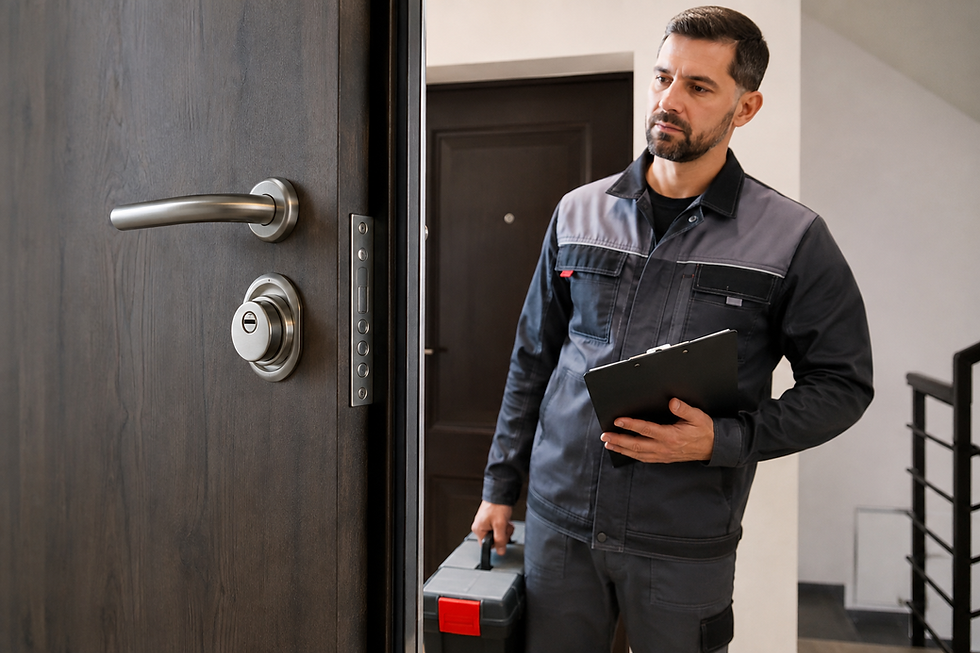
In simple terms, security hardware consists of various mechanical components that turn an ordinary door into a much more difficult obstacle for a burglar. These include protective escutcheons, security fittings, reinforced door hinges, special covers for the lock cylinder, and other components. Each of these elements performs its own function.
The most important components include:
A protective escutcheon covers the lock cylinder and makes drilling or breaking it out more difficult.
Security hardware reinforces the area of the door around the locking mechanism.
Burglar-resistant door hinges and anti-lift devices prevent the door from being easily lifted off its hinges.
A door opening restrictor creates an additional barrier if someone attempts to force their way into the apartment.
Without such elements, even an expensive door can be significantly easier to attack. An unprotected lock cylinder or openly accessible weak points give an intruder additional opportunities to target the door. The function of security hardware is therefore twofold: it makes forced access to the lock more difficult and can also act as a deterrent. Visible protective escutcheons and solid fittings signal from the outside that a break-in would require more time and effort. Such details are often underestimated, although they can play an important role during an actual burglary attempt. Protecting the cylinder in particular can prevent an intruder from quickly gaining direct access to the locking mechanism.
What Function Does Security Hardware Serve in Practice?
This raises the key question: why are additional fittings and protective plates needed if the lock is already responsible for securing the door? The answer is simple: the lock secures the door, while the security hardware is designed to prevent an intruder from easily reaching the sensitive locking mechanism in the first place.
The main functions of the individual protective components are:
protecting the lock cylinder against drilling, pulling, or forceful snapping;
increasing the door’s resistance to forced attacks using pry tools or similar equipment;
covering sensitive components so that possible weak points are harder to identify from the outside;
reducing stress on certain parts of the lock and potentially extending the service life of the entire mechanism.
Before simply buying any protective escutcheon or fitting, however, it is important to check whether the selected component is compatible with the existing lock and door. Truly universal solutions are limited, and correct fitting is essential.
The following points should be considered when making a selection:
Thickness and material of the fitting. The metal should be strong and resistant and should not serve only a decorative purpose.
Compatibility with the type of lock already installed in the door.
Quality of the mounting. Screws and bolts should preferably be concealed or protected against manipulation from the outside.
Quality of the manufacturer, as very inexpensive and thin fittings may give way much more quickly under heavy force.
Anyone choosing a new door or wanting to make an existing door more secure should therefore pay attention not only to the thickness of the metal but also to how well potential weak points are protected. This can help the lock remain reliable for longer and improve the overall security level of the door. If there are already problems with the lock or the door can no longer be opened independently, the Door Opening Berlin Spandau service can help resolve the situation without unnecessary complications.


Comments