Acil durum
Top Reasons Why the Front Door Lock Gets Stuck
 Alex H., KeyWay'in kurucusu, acil serviste 8 yılı aşkın
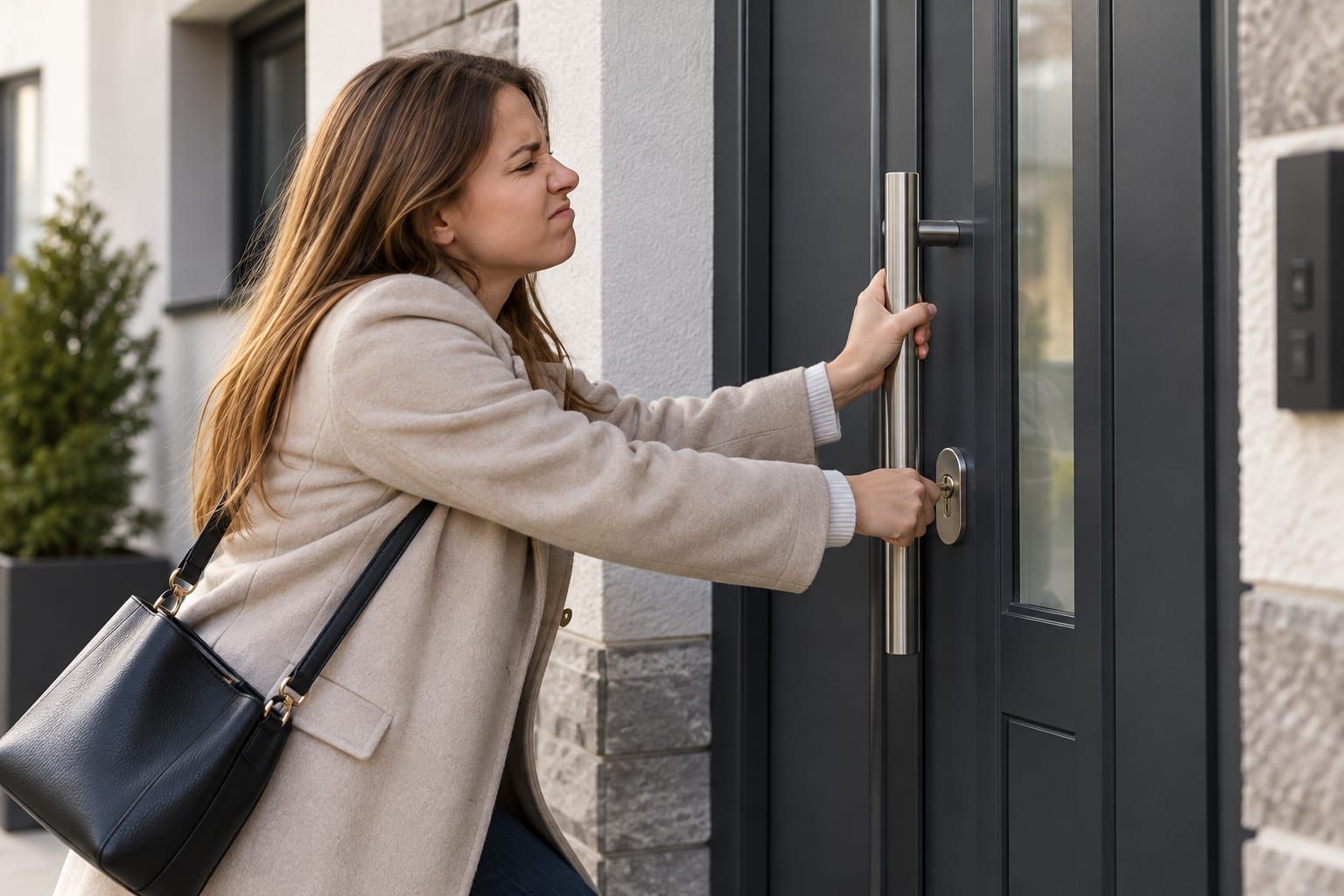
Sometimes the front door suddenly starts causing problems: Yesterday, the key turned smoothly, but today you already need to apply considerably more force. In such situations, many people immediately assume that the lock is defective, although the actual cause is often somewhere else entirely. We explain why a front door lock jams, which warning signs you should not ignore, and when it is better not to rush into repairs. The most sensible approach is to act as soon as the first warning signs appear, while the problem can still be resolved without significant expense.
Why Does the Lock Jam and What Happens Inside the Mechanism?
The door may sag, the locking bolts may press against the strike plate, and dirt can accumulate inside the lock over time. Therefore, similar problems can have completely different causes. In such situations, a professional locksmith in Stahnsdorf can identify the cause and carry out the necessary repairs properly.
The most common reasons why a front door lock does not work properly are:
- Misaligned door. Over time, hinges wear out, fastenings become loose, and a heavy door may shift slightly out of position. As a result, the locking bolts can get caught on the openings in the strike plate.
- Dirt and dust inside the lock cylinder. Small particles enter the keyhole along with the key, especially when the front door opens directly to the outside. This interferes with the normal movement of the locking pins.
- Wear of the lock cylinder. The components inside a cylinder do not last forever. After numerous locking and unlocking cycles, individual parts gradually wear out. As a result, the key may jerk when turning, and the usual smooth operation becomes increasingly difficult.
- Problems with the strike plate. If the openings in the strike plate are positioned slightly above or below the locking bolts, locking the door requires considerably more force.
- Damaged key. A bent, worn, or poorly made replacement key can cause resistance even when the lock itself is functioning properly.
A simple test can often help you avoid unnecessary expenses. With the door open, check whether the key turns easily. Then carefully compare this with how the lock operates when the door is closed. The difference can indicate whether the problem lies inside the lock itself or in the alignment of the door.
Why Does the Door Lock Jam and When Should You Call a Professional?
If the resistance remains regardless of whether the door is open or closed, you should have the lock inspected more closely. It is particularly important to avoid using force. Applying excessive pressure to the key can quickly turn a minor malfunction into a serious defect. If the problem persists, a professional locksmith in Teltow can inspect the locking mechanism and eliminate the cause of the malfunction.
Why does the lock jam? Several factors may be responsible:
- Dirty or damaged lock cylinder. If the key is difficult to insert, gets stuck, or barely turns, you should never try to force it with pliers.
- Insufficient or unsuitable lubrication. Over time, the mechanism may lose its original lubrication. However, pouring just any type of oil into the lock is not a good idea. Some lubricants thicken over time and attract additional dust.
- Damaged or displaced components. If the key turns only partially, spins without engaging the mechanism, or fails to move the locking bolts completely, attempting to dismantle the lock yourself may cause further damage.
- Frost and moisture. Low temperatures can also temporarily affect the lock’s operation. After a sudden drop in temperature, condensation may form inside the mechanism and subsequently freeze.
- Advanced wear. If the lock has been installed for many years and has become increasingly difficult to operate, replacing a worn component is often more practical than repeatedly attempting repairs.
If your front door lock is not working properly, pay close attention to when the resistance occurs. Is the key already difficult to insert? Or does the lock jam when you turn the key, after one complete rotation, or only when the locking bolts move?
Especially when the key is difficult to turn inside the lock, it is important to identify the actual cause before replacing any components.
The reasons for a stiff locking mechanism are not always found inside the lock itself. Sometimes adjusting the door hinges or correcting the position of the strike plate is enough. In other cases, replacing the lock cylinder is necessary.
The most important thing is not to ignore the problem until the key becomes completely stuck or even breaks inside the keyhole. A timely inspection can prevent more serious damage and unnecessary repair costs.
 Alex H.
KeyWay'in kurucusu. Acil serviste 8 yılı aşkın deneyim.